
First Source Capital Mortgage · Texas
Texas Equestrian Property Financing for Land, Horses, Barns, and Arenas
A guide to the specialized improvements, valuation, operating, insurance, and financing questions that horse-property buyers should resolve before applying.
Educational discussion only; financing is subject to lender review.
Buyer education
What buyers should understand before a financing review
This guide is designed to help you ask better questions about the property and its financing path. It does not replace a lender's underwriting, an appraisal, a survey, an inspection, or legal, tax, insurance, and investment advice.
What qualifies as an equestrian property?
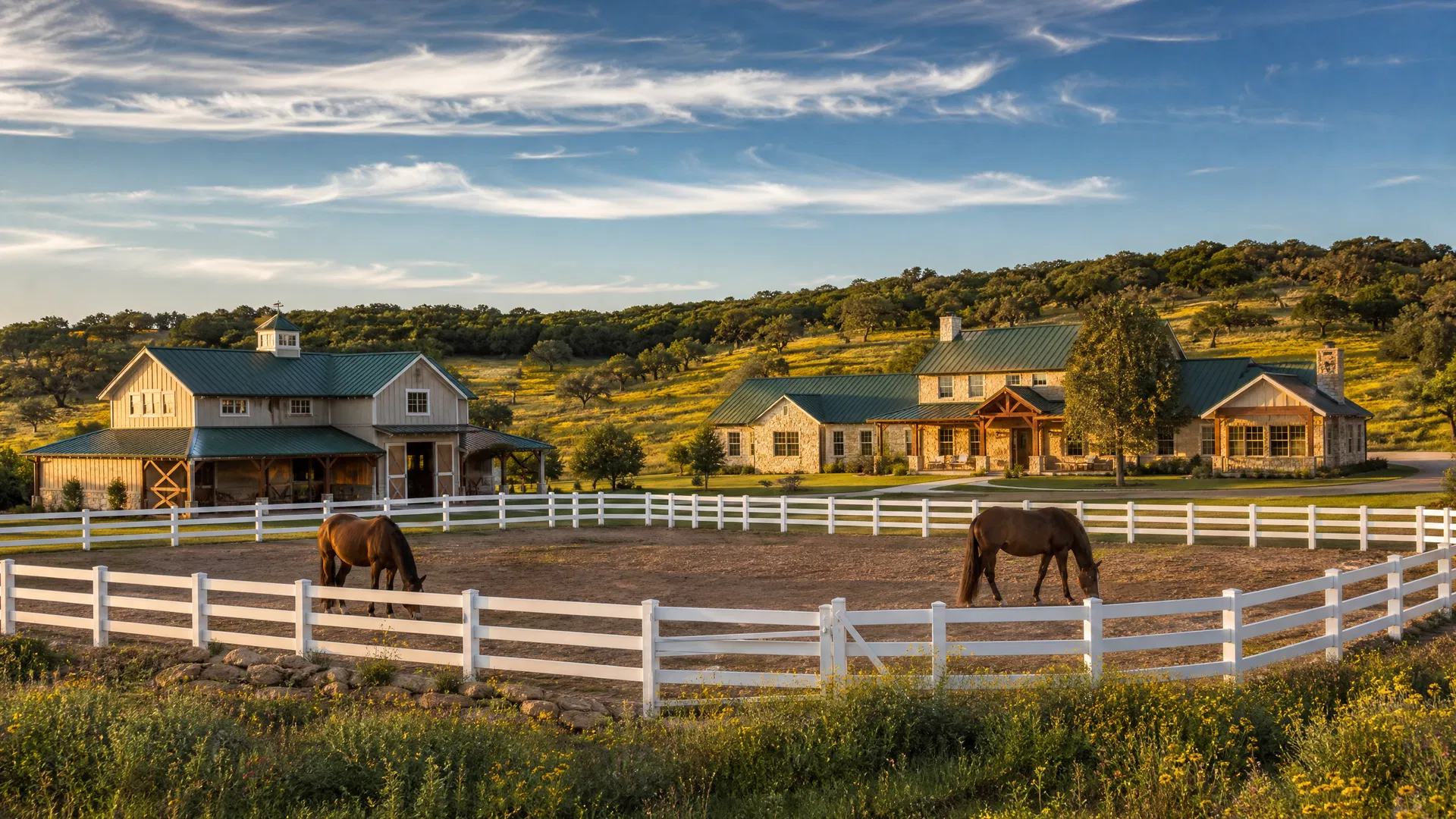
An equestrian property is acreage or a rural residence with facilities designed around horse ownership or equine operations. It may include a home, barn, stalls, arena, turnout, pasture, wash rack, tack room, breeding facilities, training areas, or boarding activity. The property is evaluated as a whole; one arena or barn does not automatically place it in a specific lender category.
Some properties are primarily personal horse homes, while others have commercial activity such as boarding, training, lessons, breeding, rehabilitation, or events. The intended and actual use can affect appraisal, insurance, zoning, income documentation, and lender-program fit. Buyers should be clear about how the property will be used at closing and after closing.
Before a financing discussion, gather the listing, survey, photos, building details, arena dimensions, stall count, acreage, access, water and septic information, permits if applicable, business or lease documentation, and plans for any construction. The details help explain what is permanent real property, what is equipment, and how the operation works.
What can qualify as an equestrian property?
- Horse ranches with a residence, barn, turnout, and pasture
- Training, lesson, boarding, breeding, or rehabilitation facilities
- Properties with indoor, covered, or outdoor arenas and round pens
- Equine properties with wash racks, tack rooms, stalls, sheds, and specialized fencing
- Rural homes with meaningful horse improvements or acreage
- Land-and-build projects where the residence and horse facilities are planned together
Why can equestrian properties be difficult for conventional lenders?
An equestrian property can be harder to place than a standard suburban residence because a lender has to evaluate both the borrower and collateral that may not fit a conventional template. A local lender may be comfortable with one part of the property but not another, such as acreage, specialized improvements, nontraditional construction, variable income, or a limited pool of comparable sales. A decline can reflect that program’s scope rather than a conclusion that the property has no value.
FSCAP’s role as an independent mortgage broker is to understand the complete property story and identify programs that may be appropriate to review. That is not a promise of approval. The useful first conversation is about the tract, intended use, improvements, title and access, construction or operating plan, and documentation—not just a credit score or a listing price.
For this property category, the appraisal evidence for specialized barns, arenas, and the property’s residential versus commercial use is often where an early review adds the most value. Addressing it before a contract deadline, appraisal order, or construction start can help a buyer understand the questions a lender may raise and avoid treating a preliminary conversation as a lending commitment.
How equestrian-property financing is reviewed
A financing review considers the property, the borrower, and any operating use. Property questions can include acreage, residence, barn and arena construction, water, drainage, fencing, access, title, septic, condition, permits, zoning, and insurance. Borrower questions may include income, assets, liabilities, credit, reserves, ownership entity, and supporting documentation.
Where boarding, training, breeding, or lesson revenue exists, a lender may require tax returns, financial statements, leases, licenses, or other records. A buyer should not assume gross revenue or future bookings will be treated as qualifying income. The exact approach depends on the program and the lender’s underwriting requirements.
FSCAP can help identify documentation and discuss potential lender paths. Approval, terms, appraisal acceptance, and closing remain subject to the applicable lender’s complete review.
Is an equestrian property a good investment?
Equestrian property value is often tied to its usability for horses, the quality and condition of improvements, location, water, access, surrounding demand, and whether the design suits a broad buyer pool. The property can support a lifestyle, business, or family goal, but that does not make a future return automatic.
An owner should separately evaluate the land, residence, horse facilities, operating plan, and maintenance burden. A beautiful arena or barn may be central to a buyer’s decision while contributing less or differently to market value than the owner expects. Business income may be seasonal or variable and should not be treated as guaranteed.
A conservative plan assumes routine upkeep, insurance, taxes, water and fencing costs, and changing local demand. Consult local equestrian, real-estate, tax, and legal specialists for decisions outside the mortgage process.
The real bottleneck: appraising specialized horse improvements
Specialized equestrian improvements can be difficult to compare because not every rural sale includes similar arenas, barn design, stall count, drainage, footing, wash racks, turnout, or operating history. An appraiser analyzes market evidence and the contribution of real-property improvements; a replacement-cost figure or owner preference does not control the conclusion.
Owners and buyers can help organize the facts without directing the appraisal. Provide construction details, permits, plans, photos, maintenance records, invoices, site plan, utility information, and a clear distinction between permanent structures and movable equipment. The independent appraiser decides what is relevant to value.
If the property includes a business, explain it transparently. The value of a going concern, horses, equipment, or future bookings may not be the same as real-estate value. That separation protects buyers from relying on assumptions that may not translate into collateral support.
What does horse-property ownership actually cost?
The purchase price does not capture the full equestrian budget. Buyers should plan for barn and arena maintenance, fencing, water, drainage, manure management, footing, equipment, utilities, insurance, property taxes, repairs, and possible business compliance. Condition can change the cost picture quickly, particularly for older facilities or properties with extensive improvements.
Before closing, ask about well capacity, drainage, flood history, septic, private-road responsibility, fencing condition, building permits, arena footing, utility service, and whether any equipment is included or excluded. Have qualified professionals inspect the components relevant to your intended use.
Loan costs and payment figures are transaction-specific and come through the application and disclosure process. This page provides education, not a quote, payment estimate, or offer.
What drives equestrian-property resale value?
Resale can be influenced by location, acreage, access, water, residence condition, barn and arena quality, layout, maintenance, and the size of the local horse-property buyer pool. A versatile facility may appeal to more buyers than a highly customized setup, though local market preferences matter.
If future flexibility is important, consider whether the property works for personal horse owners, trainers, families, and rural-home buyers—not only one operating model. Maintain records of improvements and condition, but avoid assuming that cost equals resale value.
An appraisal and later sale are separate events, each based on market conditions at the time. Neither can be guaranteed by a lender, broker, or seller.
Insurance, risk, and ongoing equestrian obligations
Horse-property insurance can involve the residence, barns, arenas, liability, guests, lessons, boarding, employees, equipment, and animals. Coverage and exclusions differ by carrier and use. Obtain property-specific professional guidance before relying on a general estimate or a standard homeowners policy.
Title, access, water, drainage, zoning, permits, business rules, and neighbor relationships can all affect an equestrian property’s usability. Seek qualified Texas legal, title, insurance, and local-government advice for specific concerns. FSCAP does not provide those professional services.
Eligible veterans and military members who are considering a separate qualifying raw-land purchase can review the Texas Veterans Land Board program directly. It has separate conditions and should not be confused with financing of a completed horse facility.
Comparing a broker, bank, and cooperative for a horse property
A broker may evaluate a scenario across multiple lender programs, while a bank may offer a portfolio option and a cooperative may offer products under its borrower-membership model. The appropriate route depends on the residence, acreage, improvement mix, business activity, documentation, and written program requirements.
The source-linked FSCAP vs. Capital Farm Credit comparison provides general model context, not a rate quote or approval comparison for a horse property. Confirm current lender policies, membership requirements, and property eligibility directly.
A review may not fit a buyer who needs a guaranteed arena value, expects an unpermitted commercial use to be accepted, relies on undocumented revenue, or has not budgeted for care and maintenance. Identifying those issues before contract deadlines protects the decision process.
Bottom line on equestrian-property financing
The strongest equestrian-property file tells a complete story about the land, residence, horse improvements, intended use, operating information, insurance, and documentation. Specialized does not mean impossible; it means preparation matters.
FSCAP can discuss a Texas equestrian scenario and explain the information a lender may request. The conversation is educational, and all lending decisions remain subject to the applicable lender’s review.
Common questions
Equestrian Property Loans FAQ
Can a horse ranch be financed?
It may be financeable when the property, intended use, borrower profile, appraisal, title, insurance, and lender program meet applicable requirements.
Do arenas and barns automatically add appraised value?
No. An independent appraiser evaluates their contributory value using market evidence. Cost, equipment, and an owner’s intended use do not alone determine value.
Can boarding or training income be considered?
Treatment varies by lender program. Documented income may be reviewed under applicable guidelines; projected or undocumented income may not be usable for qualification.
What should I disclose about an equestrian business?
Describe the actual and intended use, revenue sources, leases, permits, employees, customers, equipment, and insurance. Accurate disclosure helps determine which programs may be appropriate to review.
Does a property need a residence to be considered?
Program requirements vary. The property configuration and intended use affect the available lender options.
Why is water and drainage important for horse property?
Water supply, drainage, soil, and maintenance affect use, condition, insurance, and ownership costs. Qualified professionals can evaluate property-specific conditions.
Can I build a barn or arena after buying land?
Construction, land-and-build, or other paths may be considered depending on the project and lender program. Plans, budget, contractor, permits, and site details may be needed.
Does speaking with FSCAP guarantee a loan?
No. An early discussion is educational. Any prequalification, approval, or commitment is separate and subject to the lender’s complete review.
Related education and services
Ready to discuss the property, not just the price?
Share the details of your Texas property and ownership plan. FSCAP can explain the questions a lender may need to review and whether a financing conversation is worth pursuing.
Educational information only. This page is not a loan offer, rate quote, approval, commitment to lend, or guarantee of savings. Financing availability, property eligibility, pricing, documentation, and closing requirements vary by borrower, property, lender program, and applicable law. First Source Capital Mortgage, Inc. NMLS #217672. Equal Housing Opportunity.
Reviewed by Dan Cunyus, President, NMLS #218025 · Last substantive review: September 29, 2026