
First Source Capital Mortgage · Texas
Texas Barndominium Financing for Properties That Do Not Fit a Standard Box
A guide to the property, appraisal, construction, insurance, and financing questions Texas barndominium buyers should resolve before they apply.
Educational discussion only; financing is subject to lender review.
Buyer education
What buyers should understand before a financing review
This guide is designed to help you ask better questions about the property and its financing path. It does not replace a lender's underwriting, an appraisal, a survey, an inspection, or legal, tax, insurance, and investment advice.
What is a barndominium, and why does the label matter to a lender?
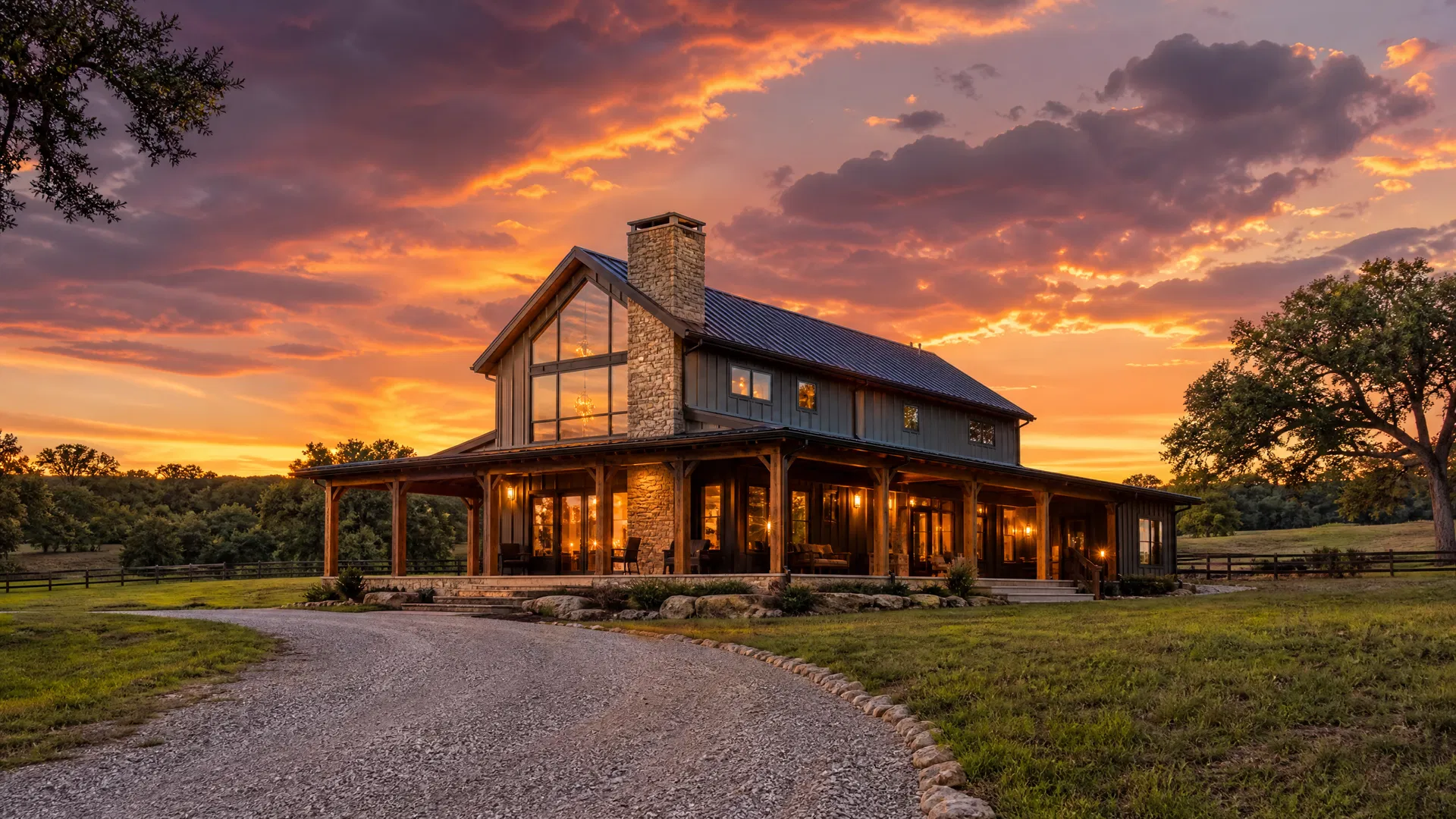
A barndominium is generally a residence built in, attached to, or styled after a metal or barn-type structure. Some are simple country homes with a shop; others are custom residences on acreage with substantial finish-out, attached storage, livestock facilities, or business-use areas. The word itself does not decide eligibility. A lender instead needs to understand how the property is built, used, permitted, insured, and valued in its market.
That distinction matters because two properties that are both marketed as barndominiums can be very different collateral. An existing, fully finished residence may be reviewed differently from a shell that still needs interior work. A home with a detached workshop may be different from a mixed-use structure where business equipment, commercial storage, or livestock operations occupy a material part of the building.
Before pursuing financing, buyers should collect the property description, acreage, floor plan, photos, permits where applicable, construction contract or bids for a build, and any information about water, septic, utilities, access, and insurance. These items help make the conversation about the actual property rather than a label alone.
What can qualify as a barndominium property?
- Existing steel-frame or metal-building homes with completed residential interiors
- New construction with a documented building plan, budget, contractor, and draw schedule
- Barndominium-and-land purchases where the house, shop, and acreage are evaluated together
- Properties with a residence plus workshop, storage, garage, or other mixed-use spaces
- Conversions where a former agricultural structure has been permitted and finished for residential use
- Owned-land projects where existing land equity may be part of the overall review
Why can conventional lenders hesitate on barndominiums?
A barndominium can be harder to place than a standard suburban residence because a lender has to evaluate both the borrower and collateral that may not fit a conventional template. A local lender may be comfortable with one part of the property but not another, such as acreage, specialized improvements, nontraditional construction, variable income, or a limited pool of comparable sales. A decline can reflect that program’s scope rather than a conclusion that the property has no value.
FSCAP’s role as an independent mortgage broker is to understand the complete property story and identify programs that may be appropriate to review. That is not a promise of approval. The useful first conversation is about the tract, intended use, improvements, title and access, construction or operating plan, and documentation—not just a credit score or a listing price.
For this property category, the appraisal support and construction classification is often where an early review adds the most value. Addressing it before a contract deadline, appraisal order, or construction start can help a buyer understand the questions a lender may raise and avoid treating a preliminary conversation as a lending commitment.
How barndominium financing is reviewed
A complete review commonly starts by separating the transaction into its parts: existing home purchase, land purchase, construction on owned land, land-and-build project, refinance, or renovation. The applicable documentation and lender programs can differ materially between those paths. A buyer should avoid assuming that an approval path for an existing residence also applies to a ground-up build.
For construction, a lender may ask for a signed contract, contractor credentials, plans and specifications, line-item budget, contingency approach, permits, draw process, and a realistic completion timeline. For a completed property, the focus may shift to appraisal support, condition, functional utility, insurance, title, and the relationship between residence, acreage, and any shop or agricultural use.
FSCAP can discuss available financing paths for a specific scenario, but written terms, underwriting approval, and property acceptance must come from the applicable lender. Ask for clarity on which assumptions still need confirmation before you rely on an estimated structure or timeline.
Is a barndominium a good investment?
A barndominium is not automatically a good or bad investment. The answer depends on the land, construction quality, location, usable design, maintenance, local buyer pool, and the owner’s holding period. A buyer looking for a long-term rural home may weigh the property differently from someone expecting a short resale cycle or rental income.
It is useful to separate the structure from the land. In many rural transactions, the location, access, utilities, acreage, water features, and local demand can influence value as much as—or more than—the building style. A metal shell alone does not establish value, and a customized interior may not return every dollar spent when the property is sold.
Buyers should build a conservative plan that works without assuming appreciation, quick resale, or a future refinance. A local real-estate professional, appraiser, builder, insurance agent, tax professional, and lender each answer a different part of that question. No one source can replace tract-specific due diligence.
The real bottleneck: appraisal support and a complete property file
The practical bottleneck for many barndominium transactions is not the metal exterior; it is whether the property can be supported by credible appraisal analysis. Comparable sales may be limited in a county where few similar homes have sold. A property with unusual square footage, extensive shop space, large acreage, or highly personalized finish-out can make the appraiser’s job more complex.
Good preparation does not control an appraisal outcome, but it can reduce avoidable gaps. Buyers and sellers can organize plans, construction specifications, invoices, permits, photos, lists of improvements, surveys, utility information, and any relevant comparable sales for the appraisal professional to consider independently. The appraiser—not the borrower, seller, broker, or lender—reaches the value conclusion.
For new construction, a scope that is vague, incomplete, or disconnected from the budget can create problems before valuation begins. Confirm who is responsible for site work, well, septic, driveway, electrical service, finish-out, allowances, and change orders. These are ownership decisions as well as financing questions.
What does a barndominium actually cost to own and build?
Per-square-foot advertisements rarely show the complete project cost. The shell, interior finish-out, slab, site preparation, road or driveway work, survey, engineering, well, septic, utility extension, permits, landscaping, fencing, insurance, taxes, and contingency can each change the total. A lower initial shell price does not necessarily mean a lower finished-project cost.
Compare written, like-for-like scopes rather than headline builder estimates. Ask which materials, labor, allowances, appliances, foundation specifications, site conditions, and utility assumptions are included. If a cost changes with soil, drainage, access, distance to service, or local permitting, treat it as an open variable until it is documented.
Borrowing costs and cash-to-close are also separate from construction cost. A lender’s disclosures after application, including any required Loan Estimate, are the appropriate source for transaction-specific terms and costs. This educational page is not a quote or an estimate of what any applicant will pay.
What tends to drive barndominium resale value?
Resale value can be influenced by location, market depth, acreage, access, floor plan, condition, finish quality, utility reliability, shop configuration, and whether the design appeals to more than one narrow buyer profile. A practical layout with durable systems and complete documentation may be easier for a future buyer to understand than a project with unusual use or unfinished work.
The availability of comparable sales also matters over time. Where the local market has an established base of barndominium transactions, appraisers and buyers may have more reference points. In a thin market, the buyer pool and appraisal support can be less predictable. That uncertainty is a reason to avoid treating an online valuation or a builder’s list price as a guaranteed resale outcome.
If resale flexibility matters, buyers should consider a floor plan, bedroom and bath count, site layout, permitted use, and maintenance plan that make sense for ordinary rural-home buyers as well as for barndominium enthusiasts.
Insurance, risk, and ongoing ownership costs
Insurance availability and replacement-cost treatment should be checked before a buyer becomes committed to a property or construction contract. A carrier may assess the building materials, roof, distance to fire protection, location, mixed use, workshop contents, and replacement cost differently from a standard subdivision home. Coverage, exclusions, deductibles, and eligibility vary by carrier and policy.
Rural ownership can also include ongoing costs that a suburban listing does not make obvious: well and septic maintenance, private-road obligations, fencing, drainage, propane, internet, insurance, property taxes, and upkeep of large outbuildings. For a build, leave room for completion risk and change orders rather than assuming every line item will land exactly on the initial plan.
An insurance agent, builder, title professional, county office, and qualified local adviser can help with property-specific questions. FSCAP does not provide legal, tax, insurance, engineering, or appraisal advice.
Financing options: broker, local bank, cooperative, and government programs
An independent broker can review a scenario against more than one lender program; a local bank may offer a relationship-based portfolio option; a rural cooperative may offer products for its eligible borrower-members; and government-backed programs have their own property, occupancy, income, construction, and eligibility rules. None is universally best. The appropriate path depends on the property and the borrower profile.
Eligible Texas veterans and military members may also wish to review the Texas Veterans Land Board directly when purchasing qualifying raw land. The VLB Land Loan Program has separate eligibility, acreage, access, ownership-history, and program requirements. It is not an FSCAP loan offer, and program terms can change. Review current rules with the Texas General Land Office before relying on it.
A short comparison can help frame the questions: a broker may provide lender-choice breadth; a bank may be a fit for an existing relationship; and a cooperative may be a fit for a borrower seeking its model and products. See the educational FSCAP vs. Capital Farm Credit comparison for source-linked context, then confirm any lender’s current written terms directly.
Who a barndominium financing review may—and may not—fit
A review may be worthwhile for a buyer with a clearly documented existing barndominium, land-and-build plan, or owned-land construction project who is prepared to discuss the full property picture. The more unusual the property, the more important it is to start early and gather complete documentation before spending heavily on appraisals, plans, or site work.
It may not be a fit for a buyer who needs a guaranteed appraisal, expects a lender to finance an undefined build, plans to use a residence primarily for an unpermitted commercial purpose, or has not addressed title, access, insurance, and utilities. Those are issues to solve, not details to defer.
The bottom line: a barndominium can be financeable, but the file should be built around the real property and realistic plan—not around a label or a marketing estimate. A conversation with FSCAP is informational and does not constitute approval or a commitment to lend.
Common questions
Barndominium Loans FAQ
Can a barndominium be financed?
It may be financeable, but eligibility depends on the completed or proposed property, construction status, appraisal support, borrower profile, title, insurance, and lender program. A barndominium label alone does not determine approval.
Can land and a barndominium be reviewed together?
Some construction or land-and-build paths may evaluate land and improvements together. The structure, title, budget, contractor, utilities, appraisal, and program requirements must be reviewed for the specific transaction.
Why are barndominium appraisals sometimes difficult?
Comparable sales may be limited, especially for unusual designs, large acreage, or thin rural markets. An independent appraiser determines the value conclusion using available market data and applicable appraisal methods.
What documents help with a new barndominium build review?
Commonly requested items may include plans, specifications, signed construction contract, line-item budget, contractor information, site-work details, survey, title information, insurance planning, and a completion schedule. Requirements vary by lender.
Can a workshop or shop house affect financing?
Yes. The size, use, permits, and relationship to the residence can affect property classification, appraisal, insurance, and available programs. Disclose the intended use early.
Should I get insurance quotes before building?
Yes. Insurance availability, replacement-cost treatment, and exclusions can differ for metal, mixed-use, rural, or remote properties. Obtain property-specific quotes before relying on an assumed cost.
Are government programs available for barndominiums?
Some government-backed programs may be possible when a property and borrower meet their specific rules. USDA, VA, and VLB programs each have separate requirements; confirm current eligibility directly with the administering agency or approved lender.
Does talking with FSCAP mean I am pre-approved?
No. An initial conversation is educational. A prequalification, preapproval, underwriting decision, and loan commitment are separate steps subject to lender requirements and documentation.
Related education and services
Ready to discuss the property, not just the price?
Share the details of your Texas property and ownership plan. FSCAP can explain the questions a lender may need to review and whether a financing conversation is worth pursuing.
Educational information only. This page is not a loan offer, rate quote, approval, commitment to lend, or guarantee of savings. Financing availability, property eligibility, pricing, documentation, and closing requirements vary by borrower, property, lender program, and applicable law. First Source Capital Mortgage, Inc. NMLS #217672. Equal Housing Opportunity.
Reviewed by Dan Cunyus, President, NMLS #218025 · Last substantive review: September 29, 2026